
. . . . Your best source for hearing aid batteries!!!
HearingUSA Hearing Aid Batteries

Hearing Aid Technology

Site Index


Page Index

The Hearing Test
Troubling Shooting Hearing Aids
Maintaining Your Hearing Aid
A Word About Batteries
Hearing Aid Selection
Conventional Hearing Circuits
Advanced Technology Circuits
Miniaturized Technology
Digital & Computer Instruments
Details on Hearing Aid Circuits

Hearing aid technology that will work for you depends first of all on a good hearing test. Then you will be fitted with an hearing aid that fulfills your individual needs. A "one-size-fits-all" hearing aid does not work for most hearing losses.

Hearing aids have come a long way recently, with the advent of micro-technology. We are able to place more circuitry in a smaller package. Hearing aids now fit deep within the canal and have internal controls which automatically adjust in extreme noise conditions. No hearing aid can work as well as the one God created, but with the new technology we are getting closer.


The Hearing Test

First, you need to know what constitutes a "good" hearing test. A complete hearing test consists of the following components: Pure Tone Air Conduction test, a Bone Conduction test, Speech Reception Threshold test, and a Speech Discrimination test.

Pure Tone Air Test

Many of you are probably aware of "Pure Tone Air Testing". This is when a tester places headphones over your ears and plays different tones. You are told to indicate when you can hear each tone. This test will determine how well you hear at different frequencies. The normal human ear can hear tones from 20 to 20,000 cycles per second.

Bone Conduction Test

During the Bone Conduction test an instrument is placed against the mastoid bone, which is just behind your ear. The tester then plays the same tones as you heard during the Pure Tone Air testing. You must indicate when you hear the tones. This test will determine whether your hearing loss is due to outer or middle ear problems, or inner ear nerve damage.

Speech Reception Threshold Test

The Speech Reception Threshold is the softest point at which you are able to repeat words correctly fifty percent of the time. The Speech Reception Threshold test indicates the level of sound you need before you can hear and understand words.

Speech Discrimination Test

In the conventional Speech Discrimination test, the hearing specialist presents 25 to 50 standardized words to you, which you are asked to repeat. Word discrimination testing serves three purposes:

Return to Index

Trouble Shooting Hearing Aids

Use this guide to help solve some of the common problems patients may experience. If you have a problem not defined or one that persists, call your hearing professional right away.

1. No Sound

  • Battery may be dead.
  • Battery may be in backwards.
  • Check to see instrument is on.
  • Sound outlet may be plugged with wax.

2. Weak Sound

  • Weak battery.
  • Sound outlet may be plugged with wax.
  • Your hearing condition may have changed.
  • Microphone inlet plugged with wax.

3. Crackling/Frying Sound

  • Weak battery.
  • Wax problem.

4. Whistling Sound

  • Volume control is too high.
  • Object, such as coat collar, hat, or scarf may be covering sound inlet.
  • Excessive wax build-up in your ear.
  • Instrument may not be seated snugly in ear. If this problem persists, contact your hearing professional to determine proper physical fit of the hearing aid.

Return To Index

Maintenance for Your Hearing Product

Daily care and attention will prolong the life of your hearing investment. Wipe daily with a soft, lint free cloth. Be sure to clean the receiver and vent openings with the proper cleaning tool; see your hearing professional for the proper tool and use.

Turn off when not in use overnight. Be sure to leave the battery door open to allow any accumulated moisture to dry. It is best to store the instruments in the jewelry box your dispenser provided at delivery. Never store hearing aid batteries in the refrigerator. Also keep the battery compartment clean and dry.

Do not store the hearing instruments with the battery installed for an extended length of time. Remove the battery and store your hearing instruments in a dry place.

Remove hearing instruments before using hair spray.

Do not expose your hearing instruments to excessive moisture, humidity, or steam.

Do not wear your hearing instruments while bathing, showering or swimming.

Keep away from heat sources such as stoves heat registers, hair dryers or open flame.

Do not drop your hearing instruments or allow the instrument to be subjected to rugged handling.

Keep away from pets, dogs in particular are aroused by feedback sounds sometimes produced by hearing instruments when not being worn.

Keep fresh batteries in your hearing instruments and be aware that your hearing aid will stop functioning when the battery dies. This is of particular importance as you drive in traffic or are in other situations where you may rely on warning sounds for safety.

Keep in touch

We highly encourage you to maintain regular contact with your hearing professional. A regularly scheduled check of your instruments by your professional will enhance long lasting reliability of your custom hearing products. Yearly testing of your hearing is also crucial to assure that the products you purchased are delivering the performance needed to match any changing hearing conditions.

Only Your Hearing Professional Knows For Sure...

Your hearing instrument was designed especially for you and only your hearing professional has the information and expertise needed to solve any problems you may experience.

Return to Index

A Word About Batteries

Hearing aid batteries can be tempting and easy to swallow for small children and infants. Always store and dispose of batteries where children can not get at them.

Occasionally, batteries have been mistaken for pills, always verify your medication before swallowing.

Always store hearing aid batteries in a dry place at room temperature. Do not store them in the refrigerator, nor store them under excessive heat.

Batteries should not be carried in your pocket or purse since metal objects such as coins or keys can short out a battery. A zinc air battery uses air outside the battery as a source of power. The tab is on the battery to seal the air hole and ensure freshness until you are ready to use the battery. To activate the battery, simply remove the tab, wait one minute to allow air to enter and activiate the ingredients, and insert the battery into your hearing aid. Replacing the tab when the battery is not in use will not extend the battery.

Also, check to see if all the glue from the tab comes off with the tab, if glue is covering the air hole the battery will not work. If glue sticks to the battery you can easily remove it with a erasure.

If the battery gets wet it will erode rapidly. Take the battery out of your hearing aid and dispose of it. Remove any excess mosture from the hearing aid and then insert a clean dry battery.

Hearing Aid batteries come in 5 common sizes. The most common hearing aid battery sizes are 10, 13, 312, 675 and 5. To identify the size, most manufactures use an industry standard color code on their zinc air tabs and packaging (See our Battery Conversion Chart.) Manufactures often place letters before or after the battery size to disignate their order nubmer. For instance, 13A or R13ZA are both size 13 batteries.

Hearing aid batteries are dangerous if swallowed. If a battery should be accidentally swallowed, see a doctor immediately or call the National Button Battery Hotline @ 202-625-3333.

Recycling of your used hearing aid batteries helps to protect the environment and conserves resources. For information on how you can properly dispose of or recycle your used hearing aid batteries, call your local recycling hot line.

Return to Index

Hearing Aid Selection

There is really two parts to selecting your hearing instrument. You will be selecting the size you want to wear and also you need to be aware of all the new circuits available to enable you to hear better.

The Choice in Size

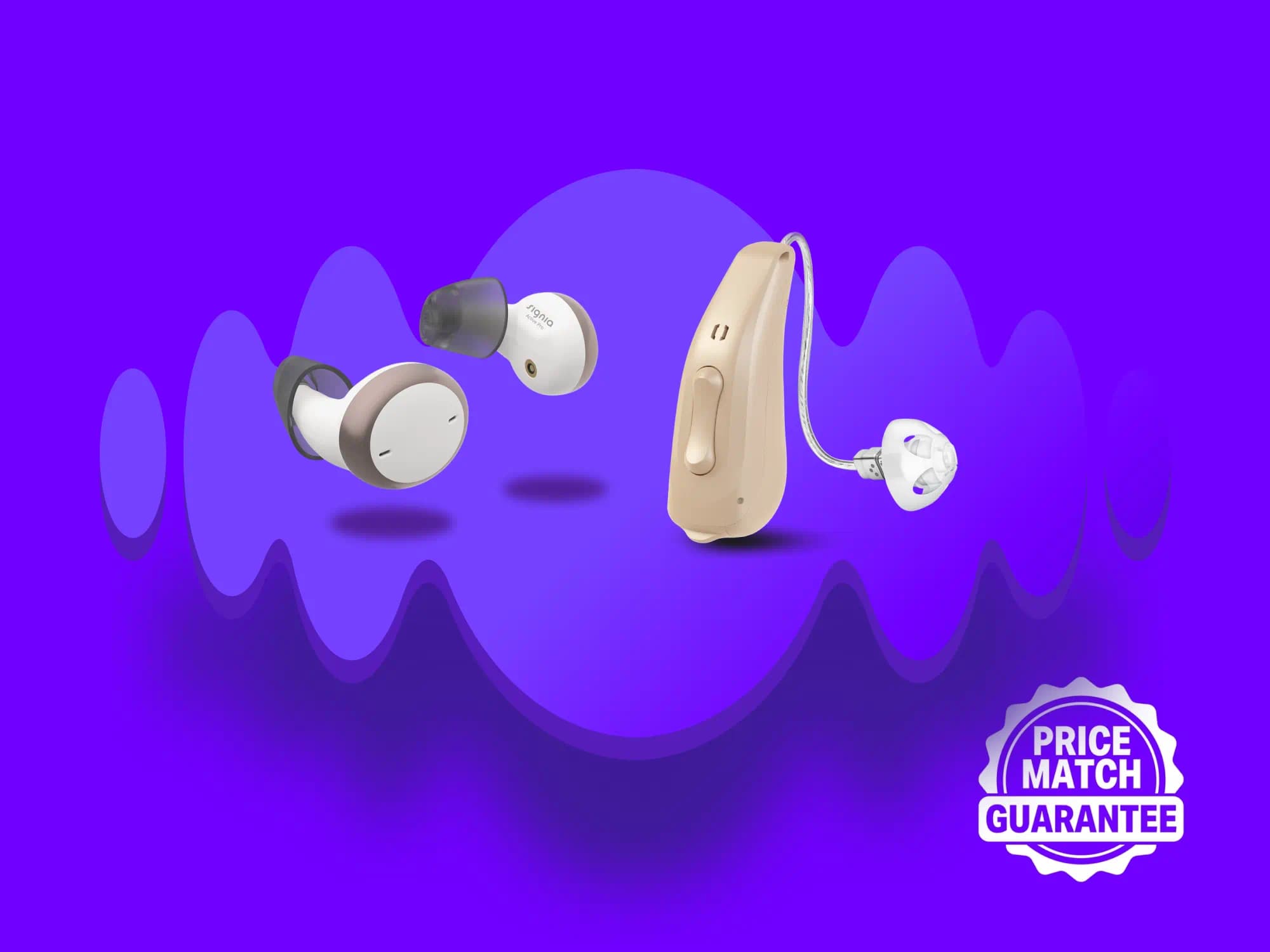
You can be fitted with a Behind-the-Ear (BTE), Eyeglass Aid, In-the-Ear (ITE), Completely-in-the-Canal (CIC) or the new smallest hearing aids which fit deep in the canal, the MicroCanal.

Behind-the-Ear, (BTE) hearing aids are still a good choice for many users. They are easier to use if the user has any difficulty handling small objects. Also, there are new Mega-Power BTEs which are able to give the user up to 80 dbs peak gain and 140 db peak SSPL 90. These are new units which has only been on the market since 1997. Many users who have a profound hearing loss have been told that they can't be helped, but with these new instruments they are able to gain at least some level of hearing. You can also take advantage of dual microphones, which are able to help many people in noise situations. Very few people wear eyeglass hearing aids and the industry is not concentrating much research on this size of hearing aids. The focus in the last few years is to decrease the size of hearing instruments and improve the quality of the sound delivered by the circuit.

One popular model of hearing aid is the In-the-Ear (ITE) or In-the-Canal (ITC). This aid was developed in the 1970's and is custom made to fit your ear canal. The ITE fills the entire outer bowl (concha) of the ear with the instrumentation contained in the case placed into the ear canal. Nearly every patient can benefit from this type of hearing aid. These instruments can also have dual microphones. The ITC is smaller and usually only fills about 1/2 of the concha bowl of the ear. They also fit a little deeper into the ear canal. The problem you can experience with either of these models is the difficulty of using a telephone with the aid in your ear due to the feedback noise you get when you hold anything too close to the microphone. You can also get a lot of wind noise with these aids. Since they are larger than the next model we will talk about, they are able to hold larger, power circuits. The size of the hearing aid still puts some restrictions on the amount of power we are able to place in the instrument.

The Completely-in-the-Canal (CIC) hearing aids are also custom made and fit completely in the canal. The MicroCanal aids are even smaller and fit deeper in the ear canal. They have a nylon string attached to extract them from the canal. These two hearing aids are the most popular aids on the market today. You will be able to use the telephone with the instrument in your ear and should not have any feedback noise. Also, since the CIC can be placed further down the ear canal we are able to give the client better understanding without needing as much power. The less power you need the less chance you have for the sounds to become distorted. Most CICs do not have any user controlled volume controls, the circuit within the hearing aid controls volume through compression circuits. Some of them do have toggle switches or you can use a remote control to change volume. None of them have dual microphones since they are too small and fit too far into the ear canal to benefit from dual microphones.

You are the one who should choose which size of hearing aid is best for your life style. The only limitation you will have is whether your hearing loss can be fit by the size you choose. Each manufacturer has defined the dynamic range which can be fit by each size of hearing aid. If you have a severe hearing loss you will probably have to use the BTE model since the circuit you need is larger. If you have problems handling small objects you may not be able to use the CIC models. If you like using volume controls, you will get the larger hearing aids, unless you want to purchase one of the programmable circuits and use a handheld remote control.

If you wear glasses the BTEs can be bothersome. If you have a very active life-style you will probably be more comfortable with a CIC if you hearing loss can be fit by one. They are much easier to use when you are active or on the phone a lot. You don't have to adjust the volume control, since most circuits placed in the CICs control volume by the use of compression. The fit on the CIC is very critical. So if they aren't fitting correctly be sure to return to your fitting professional for adjustments or a complete remake.

Also, you must remember that the size of the instrument has nothing to do with the circuit within the instrument. The only difference is that larger circuits can produce more volume and you might need a larger hearing aid, due to that factor. As the hearing industry is changing and manufacturing new circuits almost monthly, these restrictions will disappear. We are able to get so much more sound with a much smaller circuit.

You need to be aware of what circuit you are getting in your hearing aid. The size is just the package. Size is not the most important part of the hearing aid. It is the circuit which makes the greatest difference in how you will understand human speech in the different environments you live in.


Hearing Aid Circuits

Any hearing aid you purchase today can have a Class A, Class B, Class D, for Class H, or Digital circuit. These circuits should be combined with a number of other circuits, (gain circuits, noise reduction circuits, input compression, and many more). If you have been given a complete hearing test, the hearing specialist will be better able to fit you with the instrument and the circuits you need for your situation. If you want more details about hearing aid circuits check out Details on Circuits.

Today, with the new circuits, we are able to fit the hearing aid to your hearing loss. Most people have what is called a "high frequency" hearing loss. This means that they can hear relatively well in the lower bass sounds. They have trouble hearing beginning at 2000 or 3000 HZ. Therefore, these users don't need magnification at the lower frequencies, they just need the high frequencies increased to obtain level hearing at all ranges of sound.

With the new circuits we are able to adjust the hearing aid to give the user the level of sound they need in the different frequencies. We can also adjust the instrument so that no sound will enter the hearing aid louder than the user is able to tolerate. Some circuits are able to reprocess the sound until it is undistorted. Some circuits have as little as .01% distortion, most older hearing aids have as much as 10% distortion of sound.

If you have been wearing a hearing aid which is older than 1994, you would benefit greatly with these new circuits. There is new equipment which enable you to compare the sound of your current hearing instrument with the sound of the new circuits. You should visit your hearing instrument specialist and ask him to allow you to hear the difference in the new hearing instruments and explain more about the new circuits available.

Return to Index

The New Circuits

Conventional Hearing Circuits

Conventional hearing aid electronics use basic analog Class A technology to provide quality, linear-type amplification. Class A amplifiers have the characteristic of adding the same amount of amplification to all levels of sound intensity. Therefore, low bass sounds will be amplified with the same amount of volume as high treble sounds.

Some patients may find that conventional electronic hearings aids provide either too little sound or too much sound to comfortably reach a listening level for the particular hearing loss. This is especially so if you have an high frequency hearing loss. Conventional electronics represent the most basic type of amplification and are a good choice when finances are the major concern. They also are adequate if the user is mainly in quiet situtations and only talks to two or less persons at a time. Many who are house bound can be helped with this type of circuit which is very reasonably priced.

Return to Index

Advanced Technology Circuits

Advanced Technology Hearing Aid circuitries employ a more recent scientific development in amplification electronics known as non-linear or compression amplification. The result is a hearing aid with the ability to limit the level of incoming sound volume. This delivers a more natural loudness throughout the patient's entire listening range, without getting too loud or too quiet as can be the case with conventional hearing aids. Amplifiers used in advanced technology hearing aids are predominantly from the Class D family with the benefit of longer battery life and lower distortion.

Circuit designs used in instruments can include: automatic signal processing, base increases at low levels; automatic signal processing for gain control input or gain control output. Advanced technology hearing aids can also employ multi-channel technology, multiple directional microphone technology and variable release compression.

Patients with a mild to moderate-severe hearing loss, those with a high frequency loss and those with reduced tolerance to loud sounds benefit well from these circuits. The sounds heard are more balanced and natural soundings. There is less distortion of sounds. This circuits are available in all the different sizes of hearing aid shells.

Return to Index

Miniaturized Technology

Micro miniaturization of circuitries has reached the ultimate in small size within the past years. Tiny hearing aid shells called Deep Canal, MicroCanal or CIC (completely-in-the-canal) have been developed. The majority of these instruments use Class D or K-AMP circuitry. Class D amplifiers offer longer battery life and lower distortion, while K-AMP amplifiers are designed to amplify soft sounds.

These components are placed to take the least amount of space in the shell. This allows the instrument to be inserted deeply into the ear's canal. This makes the hearing aid virtually impossible to see.

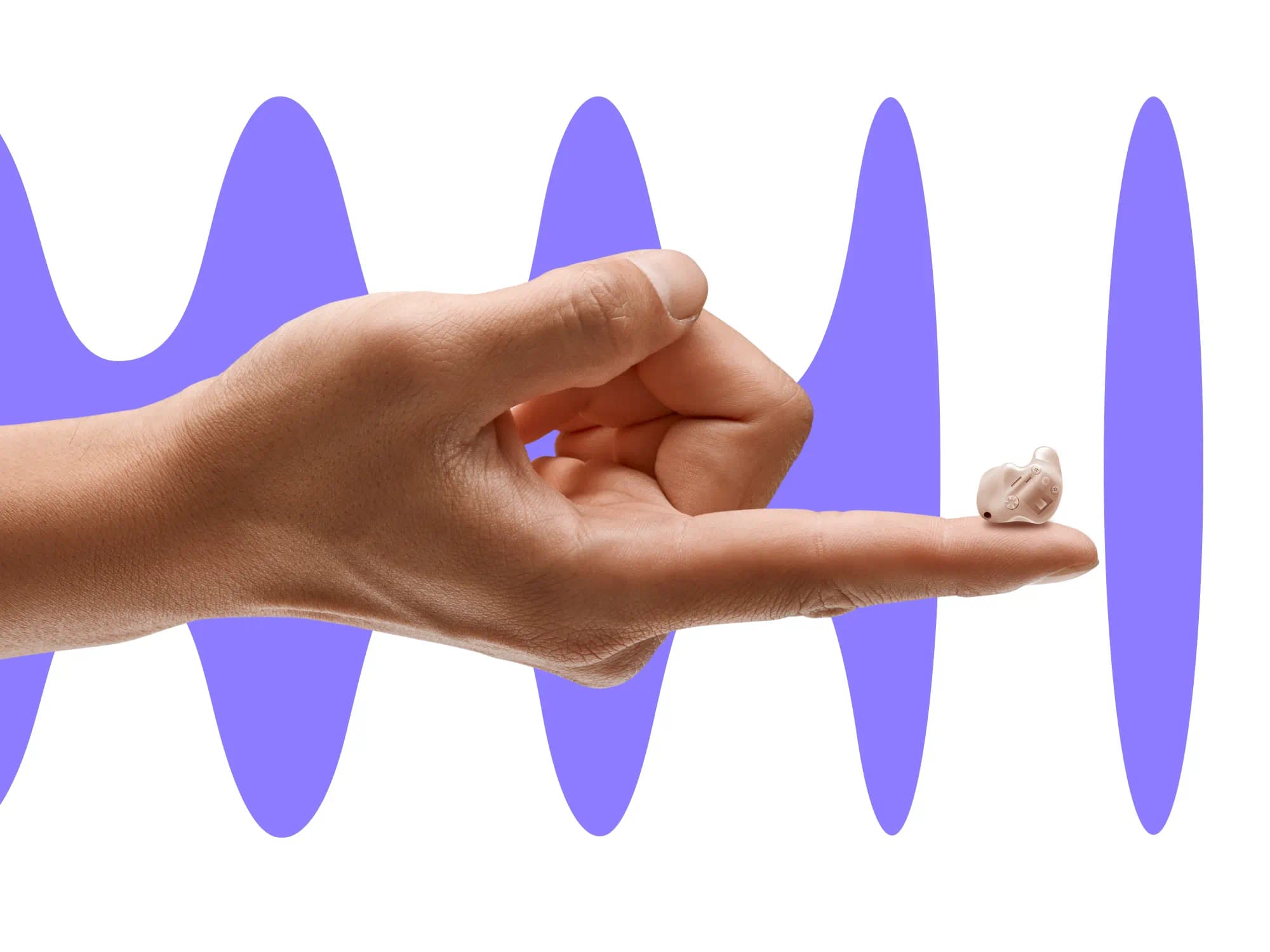
Patients who don't want to be seen wearing a hearing aid benefit greatly from the micro-technology. Also patients with an active lifestyle benefit greatly, since there is almost no "wind noise," and the wearer is able to talk on the telephone without any feedback noise. The wearer is also able to exercise and do vigorous work without losing the hearing aid. You are able to wear the aid during sleep, thus the patient can continue to hear important sounds such as speech or alarms. Also less power is needed because of the instrument's close position near the eardrum.

Return to Index

Digital & Programmable Instruments

Programmable hearing instruments are a great technology advancement. These instruments contain a computer chip which can be programmed by the hearing specialist using a computer. This offers a better way to accommodate a given patient's amplification needs because it allow the greatest flexibility and most fine-tuning capability. This unique technology separates the incoming sound into bands and processes each band independently. This class of hearing instruments utilizes separate circuit paths to independently process different frequency regions of sounds. Most of the programmable hearing aids feature variable volume, adaptable frequency response, adjustable and optional input or output compression.

These hearing aids automatically achieve more volume for the soft, high frequency sounds and less volume for the more intense, low frequency sounds. The major advantage is that the instruments can be adjusted if the patients hearing changes over time, therefore you should not have to buy another new hearing aid as frequently.

The Digital Sound Processing circuits are truly the greatest advancement in the hearing industry. The analog sound is changed into a digital format. This is where all the sound processing is done. The digital circuits also do "sound sampling", which means they listen for steady state noise and are able to dampen some of the background noise and enhance the speech sounds. You can notice this feature when you are around machine noise, or when traveling in a car the road noise should be less of a problem. Most digital processing circuits have multiple channels, so that your hearing specialist will have a much better ability to fit your hearing loss. You can learn more about some of the digital circuits on our digital circuits comparison page.

Today there is a wide range of choice for the hearing aid user and also a wide range of price. We can't explain all there is to know about current technology on this page. But we hope this short paper will help you realize how important hearing is and the importance of a proper hearing test and fitting. If you have any questions just send us E-Mail.

Return to Index
Return to Home Page

Catalog | Links - Submit a Link | Who We Are | Privacy Policy | Return Policy | Home Page |

Phone(210) 858-4999    Customer Order Line (800) 687-5405    Fax (210) 509-6236   
email! sales@hearingusa.com

John E. Thom, Ph.D.
Copyright©HearingUSA.com